
Resume Writing Tips for Women Changing Industries
Changing industries can feel exciting, but it also comes with challenges—especially when it comes to presenting your experience in a way that appeals to new employers. Many women transition careers to pursue better opportunities, higher income, flexibility, or more meaningful work. The key to making a successful shift often begins with strong resume writing.
A well-crafted resume helps hiring managers understand how your past experience applies to a new field. Instead of focusing on what you have not done, smart resume writing highlights what you can do. If you are ready to switch industries, these practical strategies will help you create a resume that opens doors.
Why Resume Writing Matters During a Career Change
When you stay in the same industry, employers can easily recognize your experience. But when changing fields, recruiters may not immediately see the connection between your background and the new role.
That is why strategic resume writing is essential. Your resume must clearly translate your skills, achievements, and strengths into language that fits the industry you want to enter. A strong resume can position you as a capable candidate instead of an outsider.
Women often bring valuable transferable skills from leadership, multitasking, communication, caregiving, project management, customer service, and problem-solving. The right resume helps those strengths stand out.
Start With a Strong Summary Statement
The top of your resume should include a professional summary that quickly explains who you are and what you offer. This section is especially important when changing industries because it frames your transition positively.
Example:
Results-driven professional with 10+ years of experience in client relations, team leadership, and operations management. Seeking to transition into healthcare administration by applying strong organizational, communication, and problem-solving skills.
This opening immediately connects past experience with future goals. Effective resume writing begins with showing direction and confidence.
Harvard Business Review: Switching Careers? Here’s How to Write a Strong Resume: “Switching career paths and trying something completely new can open you up to exciting opportunities.”
Focus on Transferable Skills
One of the biggest mistakes career changers make is focusing only on past job titles. Employers care more about relevant skills than titles alone.
Transferable skills may include:
- Project management
- Customer service
- Leadership
- Budgeting
- Scheduling
- Training and mentoring
- Data entry
- Communication
- Conflict resolution
- Time management
- Sales
- Relationship building
For example, if you worked in retail and want to move into office administration, your customer service, scheduling, inventory, and multitasking experience can be highly relevant.
Strong resume writing means translating previous work into skills the new employer needs.
Tailor Every Resume to the New Industry

A generic resume rarely performs well. Each industry uses specific language, priorities, and keywords. Review job descriptions carefully and customize your resume for each application.
For example:
If entering marketing, emphasize:
- Social media experience
- Communication
- Campaign coordination
- Creativity
- Analytics
If entering healthcare administration, emphasize:
- Scheduling
- Records management
- Confidentiality
- Customer support
- Organization
Modern resume writing requires customization because applicant tracking systems scan resumes for relevant terms.
Wharton Online: How to Write a Career-Change Resume [With Template]: “Career-change resumes focus more on transferable skills.”
Use a Skills-Based or Hybrid Resume Format
If your previous job titles seem unrelated to the new industry, consider using a hybrid resume format. This style combines a skills section with work history.
Example Structure:
- Contact Information
- Professional Summary
- Core Skills
- Relevant Achievements
- Work Experience
- Education / Certifications
This format helps recruiters notice your abilities first before focusing on job titles. For women changing industries, this can be one of the most effective resume writing strategies.
Quantify Achievements Whenever Possible
Numbers build credibility. Instead of listing duties, show measurable impact.
Weak example:
Managed customer service team.
Better example:
Managed a 12-person customer service team and improved client satisfaction scores by 18%.
Weak example:
Handled scheduling.
Better example:
Coordinated schedules for 25 staff members while reducing conflicts and delays.
Results-based resume writing shows employers what you can accomplish, regardless of industry background.
Address Career Breaks With Confidence
Many women changing industries also have career gaps due to caregiving, parenting, relocation, or personal priorities. Do not assume gaps automatically disqualify you.
Instead:
- Focus on skills gained during the gap
- Include volunteer work or freelance projects
- Highlight recent courses or certifications
- Keep explanations brief and professional
Example:
Career Pause | 2020–2023
Managed family responsibilities while completing online coursework in bookkeeping and project coordination.
Good resume writing reframes gaps as periods of growth rather than weakness.
Include Relevant Certifications and Learning
If you are moving into a new field, education can strengthen your candidacy. Even short online programs can make a difference.
Examples:
- Google Project Management Certificate
- QuickBooks Certification
- HubSpot Marketing Courses
- Microsoft Excel Training
- Medical Billing Certificate
- HR Compliance Courses
Adding fresh learning signals initiative and adaptability. In career transitions, this is valuable resume writing leverage.
Use Keywords to Pass Applicant Tracking Systems
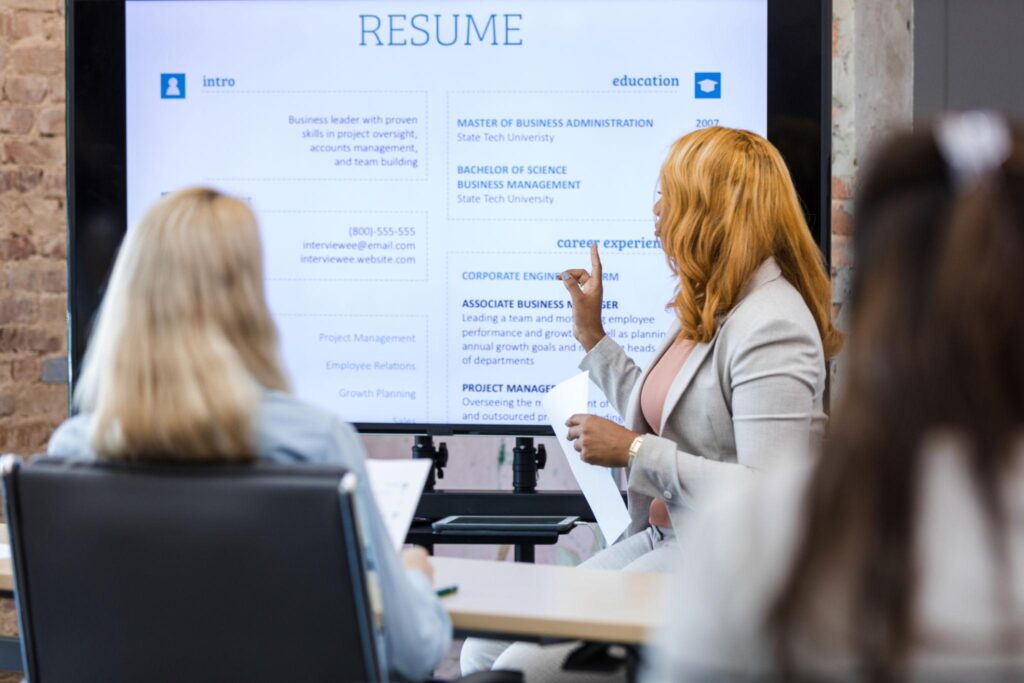
Many companies use software to scan resumes before a human reads them. If your resume lacks the right terms, it may never reach the hiring manager.
To improve results:
- Read job descriptions carefully
- Mirror relevant wording naturally
- Include technical tools mentioned
- Use common industry terms
- Avoid keyword stuffing
For example, if the posting says “client onboarding,” use that exact phrase if it matches your experience.
Smart resume writing balances human readability with software optimization.
Keep the Design Clean and Professional
Your resume should be easy to scan in seconds.
Best practices:
- Use simple fonts
- Keep margins balanced
- Use bullet points
- Avoid graphics or tables unless industry-appropriate
- Keep to one or two pages
- Use consistent formatting
Clean formatting supports strong resume writing because it helps recruiters quickly find your qualifications.
Sample Career Change Bullet Points
If moving from teaching to corporate training:
- Designed and delivered engaging training programs for groups of 30+ participants
- Improved learning outcomes through structured coaching and feedback
- Managed multiple deadlines and administrative tasks efficiently
If moving from hospitality to operations:
- Oversaw daily operations in fast-paced environments serving 200+ customers
- Trained new staff and improved workflow efficiency
- Resolved customer concerns while maintaining service standards
If moving from retail to sales:
- Consistently exceeded monthly sales targets by 15%
- Built long-term client relationships through personalized service
- Managed inventory and merchandising strategies to increase revenue
Common Resume Mistakes to Avoid
When changing industries, avoid these errors:
- Using one resume for every job
- Focusing only on responsibilities
- Ignoring transferable skills
- Including outdated information
- Writing long paragraphs
- Using vague language
- Leaving out measurable achievements
- Apologizing for changing careers
Confident resume writing positions your transition as intentional and valuable.
Create a Strong Cover Letter Too
Your resume shows qualifications, but your cover letter explains motivation. Use it to briefly tell your story:
- Why you are changing industries
- Why you are interested in this company
- How your experience adds value
- Why now is the right time
Together, your resume and cover letter create a stronger application package.
Final Thoughts
Changing industries can be one of the smartest career decisions you make. Women often bring years of practical experience, resilience, leadership, and adaptability that employers deeply value. The challenge is making those strengths visible.
That is where strategic resume writing makes all the difference. By focusing on transferable skills, measurable results, tailored keywords, and a confident presentation, you can compete successfully in a new field.
The best resume writing advice is simple: do not define yourself by your old industry. Define yourself by the value you can bring next.
If you need expert help presenting your skills for a new industry, explore these professional Resume Writing Services designed to help women stand out and land interviews.
Explore our blog for more insights and helpful information.
Click here to learn more about our career and coaching services.
Have questions or feedback? Visit our Contact page (click here) — we’d love to hear from you.